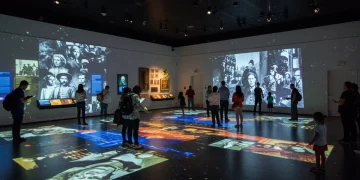
Immersive Theater’s Ascent: 20% More Venues Adopt New Tech
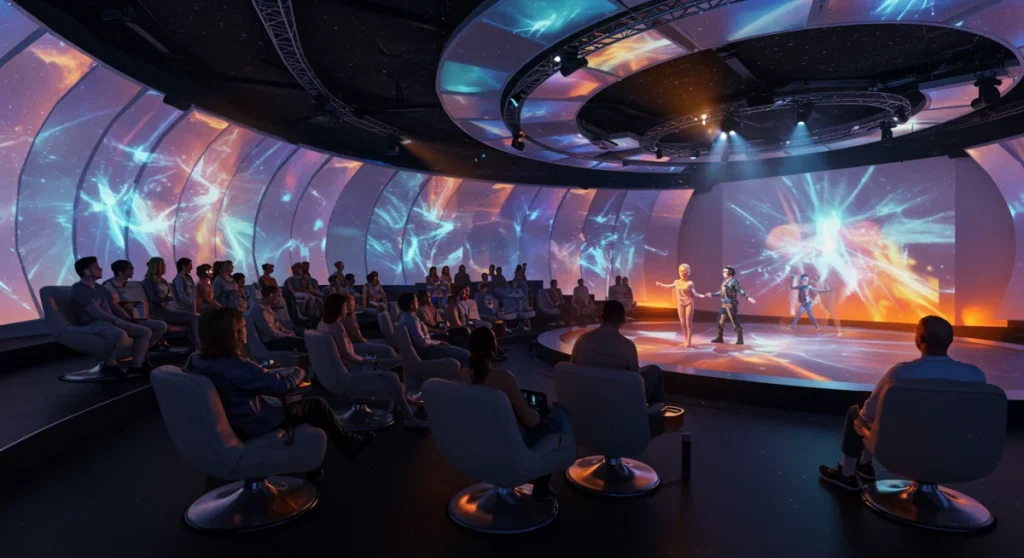
The dramatic growth of immersive theater is undeniable, with 20% more venues adopting new technologies in the last 12 months, reshaping how audiences experience live performances and fostering profound engagement.
The landscape of live performance is undergoing a profound transformation, and at its forefront is immersive theater technology. In the last 12 months alone, a remarkable 20% increase in venues has embraced new technologies to deliver these captivating experiences, fundamentally redefining the relationship between audience and narrative. This isn’t just about watching a play; it’s about stepping into a living, breathing story.
The Evolution of Theatrical Engagement
Immersive theater is not a new concept, but its recent surge in popularity and technological adoption marks a significant evolution in artistic expression. Historically, theater has sought to transport its audience, but modern technology allows for a much deeper, more personalized level of immersion. This shift moves beyond the traditional proscenium arch, inviting spectators to become participants, influencing the narrative or experiencing it from unique perspectives.
The driving force behind this revolution is a combination of creative ambition and technological advancement. Artists are constantly seeking new ways to connect with audiences, and digital tools provide an unprecedented palette for storytelling. From intricate soundscapes that follow individual audience members to interactive sets that respond to touch, the possibilities are continually expanding.
Technological Catalysts for Immersion
Several key technologies have acted as catalysts for this theatrical renaissance, pushing the boundaries of what is possible on stage. These innovations are not merely gimmicks; they are integral to crafting experiences that resonate deeply with participants.
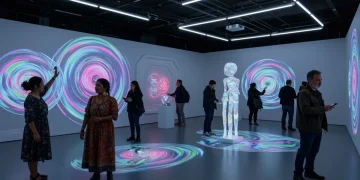
- Projection Mapping: Transforms static sets into dynamic, evolving environments, allowing for instantaneous scene changes and breathtaking visual effects.
- Spatial Audio: Delivers sound that appears to come from specific points in space, creating a highly realistic and enveloping auditory experience.
- Wearable Tech: Devices like haptic vests or personalized headphones provide sensory feedback, deepening individual connection to the performance.
- Interactive Sensors: Enable sets and props to react to audience presence or actions, making participation a tangible part of the narrative.
The integration of these technologies allows creators to build worlds that are not only visually and audibly rich but also responsive and dynamic. This level of interaction blurs the lines between performer and observer, creating a unique and often unforgettable experience. The evolution of theatrical engagement is moving towards environments that are as alive and reactive as the characters within them.
Audience Participation: Beyond the Fourth Wall
One of the most defining characteristics of immersive theater is its emphasis on audience participation. Unlike traditional theater where the fourth wall separates performers from spectators, immersive experiences actively invite the audience to cross that boundary. This can range from subtle interactions to direct involvement in shaping the story, transforming passive viewers into active co-creators.
The nature of this participation is incredibly diverse, tailored to the specific narrative and artistic vision. Some productions might require audience members to make choices that impact the plot, while others might involve them in solving puzzles or navigating complex environments. This personalized journey ensures that no two audience experiences are exactly alike, fostering a sense of ownership and discovery.
Creating Personalized Journeys
The ability to create personalized journeys for each audience member is a significant draw for immersive theater. Technology plays a crucial role in enabling this customization, allowing for branching narratives and tailored interactions based on individual choices or movements.
For instance, sophisticated tracking systems can monitor an audience member’s path through a space, directing them to specific scenes or character encounters. This level of personalization can make the story feel intensely intimate, as if it is unfolding solely for them.
- Choice-driven narratives: Audiences make decisions that alter the course of the story.
- Exploratory environments: Spectators freely roam and discover different narrative threads.
- Direct character interactions: Performers engage directly with individual audience members, often improvising responses.
- Role-playing elements: Audiences are assigned roles or tasks within the theatrical world.
This active involvement deepens emotional connection and cognitive engagement, making the theatrical experience far more memorable than a passive viewing. The success of these productions often hinges on how seamlessly technology facilitates these participatory elements without overshadowing the artistic intent. It’s about empowering the audience, not overwhelming them.
Technological Innovations Driving Immersive Experiences
The rapid advancements in various technological fields have directly fueled the growth of immersive theater. From sophisticated visual effects to intricate sensory environments, these innovations are providing creators with unprecedented tools to build compelling worlds. The integration of these diverse technologies is key to crafting truly enveloping experiences.
For example, the increasing affordability and accessibility of virtual reality (VR) and augmented reality (AR) hardware are opening new avenues for theatrical storytelling. While not always replacing physical sets, these technologies can enhance them, adding layers of digital content that react in real-time to the physical environment or the audience’s presence. This fusion of the digital and physical creates a hybrid reality that is both familiar and fantastical.
Virtual and Augmented Reality in Performance
VR and AR are no longer confined to gaming; they are increasingly being adopted by theatrical venues to offer new forms of engagement. These technologies allow for experiences that are either fully digital or that blend digital elements with live performance, providing unique perspectives and interactions.
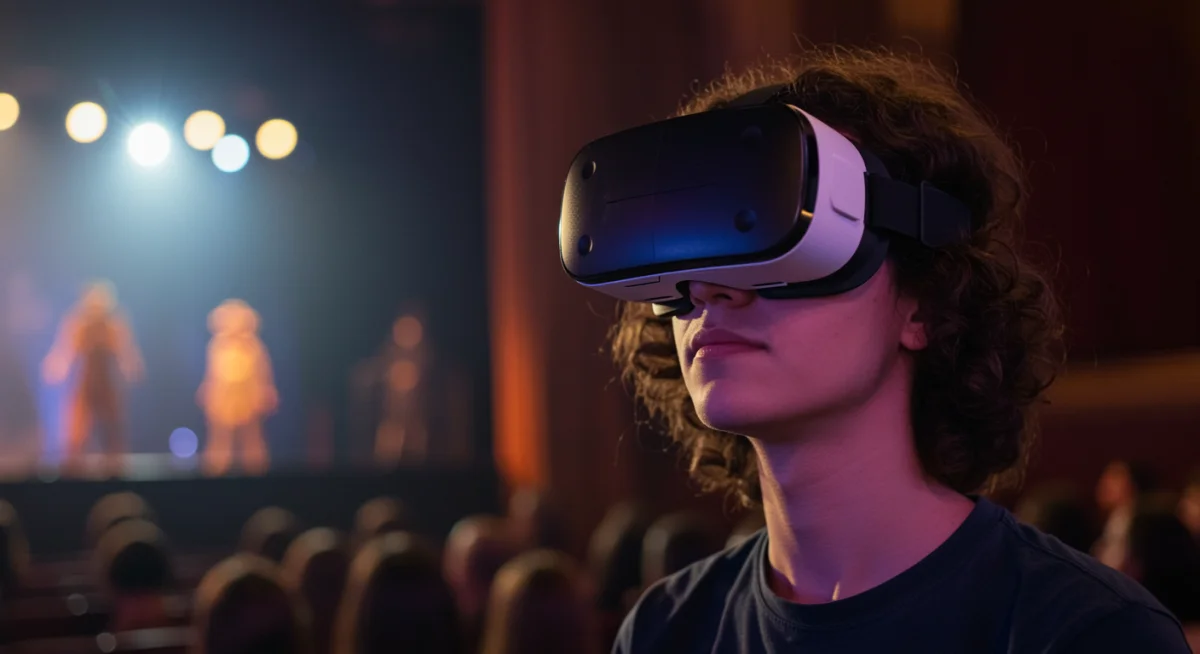
Imagine wearing an AR headset that overlays historical figures onto a modern street, or a VR experience that transports you to a fantastical realm before you even enter the physical performance space. These tools expand the narrative canvas exponentially.
- VR for individual journeys: Headsets allow for highly personalized, often solitary, deep dives into specific story aspects.
- AR for layered realities: Digital information or characters are superimposed onto the real-world performance space.
- Mixed Reality (MR) integration: Combines elements of both VR and AR, allowing for interaction with virtual objects in a real environment.
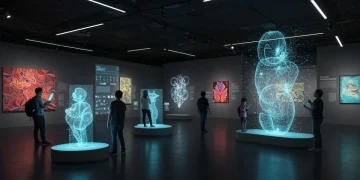
- Holographic projections: Creates lifelike 3D images that can interact with live actors and the audience.
These innovations enable creators to construct narratives that are not bound by physical limitations, offering audiences experiences that might be impossible to achieve through traditional means. The seamless integration of these digital layers is crucial for maintaining the illusion and deepening the sense of immersion.
Challenges and Opportunities in Adoption
While the rise of immersive theater technology presents exciting opportunities, it also comes with its share of challenges. The high cost of advanced equipment, the need for specialized technical expertise, and the complexities of integrating diverse systems can be significant hurdles for venues looking to embrace these innovations. However, the rewards in terms of audience engagement and artistic potential are often well worth the investment.
One of the primary challenges is the initial capital investment required for cutting-edge technology. High-resolution projectors, sophisticated sound systems, and interactive sensor arrays can be expensive. Additionally, maintaining and operating these systems demands a new skill set from technical staff, necessitating training or the hiring of new personnel. Despite these obstacles, many venues are finding creative solutions, from grant funding to partnerships with tech companies.
Overcoming Technical and Creative Hurdles
Addressing the technical and creative hurdles is essential for the sustainable growth of immersive theater. This involves not only financial planning but also fostering collaboration between artists and technologists.
- Budgeting for technology: Exploring grants, sponsorships, and phased implementation strategies.
- Talent development: Investing in training programs for existing staff and recruiting new talent with interdisciplinary skills.
- Interoperability: Ensuring different technologies can communicate and work together seamlessly.
- Scaling experiences: Designing productions that can adapt to different venue sizes and audience capacities.
The opportunities, however, are immense. Immersive theater attracts new demographics, particularly younger audiences accustomed to interactive digital experiences. It also allows for unparalleled creative freedom, enabling artists to tell stories in ways previously unimaginable. The ability to offer unique, personalized experiences also often translates to higher ticket prices and greater revenue potential, providing a strong incentive for venues to overcome these initial challenges.
Impact on Traditional Theatrical Venues
The burgeoning popularity of immersive theater has a palpable impact on traditional theatrical venues. Rather than viewing it as a threat, many established institutions are beginning to see immersive experiences as a valuable addition to their programming, attracting new audiences and revitalizing their spaces. This doesn’t necessarily mean abandoning classic plays, but rather expanding the definition of what a theatrical experience can be.
Many traditional theaters are exploring ways to incorporate elements of immersion into their existing productions, perhaps through innovative set design, audience interaction during intermissions, or pre-show digital experiences. Others are dedicating specific spaces or seasons to fully immersive works, recognizing the distinct appeal of these productions. This integration helps bridge the gap between classic and contemporary forms, ensuring the continued relevance of live theater.
Adapting Spaces and Programming
Adapting traditional theatrical venues for immersive productions often requires creative thinking and flexible design. Historic theaters, with their fixed seating and proscenium stages, can present unique challenges, but also inspiring opportunities for transformation.
- Flexible seating arrangements: Removing or reconfiguring seats to create open, traversable spaces.
- Modular sets: Designing adaptable environments that can be reconfigured for different immersive narratives.
- Multi-zone sound and lighting: Upgrading technical infrastructure to support localized effects.
- Hybrid models: Combining traditional stage performances with interactive pre- or post-show experiences.
The impact extends beyond physical adaptations; it also influences programming decisions. Venues are increasingly looking for works that push boundaries and engage audiences in novel ways, moving beyond purely passive consumption. This shift encourages playwrights and directors to think more broadly about how stories can be told and experienced, fostering a vibrant ecosystem of theatrical innovation. The embrace of immersive technology by traditional venues signifies a willingness to evolve and remain at the forefront of cultural entertainment.
The Future Landscape of Immersive Theater
Looking ahead, the future of immersive theater appears incredibly promising, with continued technological advancements and creative experimentation driving its evolution. The trend of more venues adopting new technologies is expected to accelerate, making these experiences more widespread and accessible. We can anticipate even more sophisticated integrations of AI, haptic feedback, and bio-responsive elements, creating performances that are not only immersive but also intelligently adaptive to individual audience members.
The collaboration between artists, technologists, and researchers will become even more crucial, pushing the boundaries of what is theatrically possible. Imagine narratives that learn and adapt in real-time based on audience emotions, or environments that subtly alter their appearance and sound based on individual heart rates. These advancements promise a future where theater is not just a form of entertainment, but a deeply personal, responsive, and transformative journey.
Emerging Trends and Artistic Directions
Several emerging trends are set to shape the artistic and technological directions of immersive theater, cementing its place as a leading form of contemporary entertainment.
- Hyper-Personalization: AI-driven narratives that tailor story elements to individual audience profiles and real-time responses.
- Environmental Storytelling: Performances that utilize entire neighborhoods or natural landscapes as their stage, blending fiction with reality.
- Sensory Expansion: Integration of smell, taste, and advanced haptic feedback to create multi-sensory experiences.
- Democratization of Tools: Development of more user-friendly and affordable immersive technology platforms, lowering barriers to entry for creators.
The future landscape suggests a move towards theater that is less about observing and more about living within the story. As technology becomes more seamless and intuitive, the focus will increasingly shift back to the narrative and emotional impact, with technology serving as an invisible enabler. This ongoing evolution ensures that immersive theater will continue to captivate, challenge, and inspire audiences for years to come, solidifying its role as a vital and dynamic art form.
| Key Aspect | Description |
|---|---|
| Growth Rate | 20% increase in venues adopting new technologies in the last 12 months. |
| Key Technologies | Projection mapping, spatial audio, wearable tech, interactive sensors, VR/AR. |
| Audience Role | Shifts from passive viewer to active participant, influencing narrative. |
| Future Outlook | Continued innovation, hyper-personalization, and widespread adoption. |
Frequently Asked Questions About Immersive Theater
Immersive theater is a style of performance that breaks the fourth wall, inviting the audience to actively participate in the narrative rather than passively observe. It often involves multi-sensory environments, freedom to explore, and direct interaction with performers, creating a highly personalized experience.
New technologies like projection mapping, spatial audio, virtual reality, and interactive sensors create dynamic, responsive environments. They enable personalized narratives, unique visual and auditory effects, and allow sets to react to audience presence, deepening the sense of immersion and engagement.
The adoption surge is driven by decreasing technology costs, increased audience demand for unique experiences, and artists’ desire for new creative tools. Venues recognize the potential to attract diverse audiences and offer groundbreaking productions that stand out in the entertainment landscape.
No, immersive theater doesn’t replace traditional forms; it expands the theatrical spectrum. Many traditional venues are integrating immersive elements or dedicating spaces to these productions, acknowledging their appeal. It complements and enriches the broader theatrical ecosystem, offering diverse experiences for different tastes.
Future innovations are likely to include hyper-personalized AI-driven narratives, advanced sensory feedback (smell/taste), and environmental storytelling utilizing entire locations. Continued integration of VR/AR and more accessible creative tools will further push the boundaries of audience participation and artistic expression.
Conclusion
The remarkable 20% increase in venues adopting new technologies for immersive theater over the past year is a clear indicator of a transformative shift in the performing arts. This evolution is not merely about technological prowess, but about a profound re-imagining of the audience’s role, moving from passive observer to active participant within the story. As artists and technologists continue to collaborate, overcoming challenges and embracing opportunities, the future promises even more personalized, engaging, and unforgettable theatrical experiences. Immersive theater is solidifying its position as a dynamic and vital art form, continually pushing the boundaries of storytelling and human connection.