The Latest in National Tornado Warning Technology: 4 Key Developments from the Past 3 Months
The relentless power of tornadoes demands constant innovation in detection and warning systems. In the United States, significant strides have been made in national tornado warning technology, particularly over the last three months. These advancements are not just incremental improvements; they represent fundamental shifts in how we predict, track, and communicate severe weather threats. From sophisticated artificial intelligence models to community-driven alert networks, the landscape of tornado safety is rapidly evolving, promising a future with fewer casualties and better preparedness.
Understanding these developments is crucial for anyone living in tornado-prone regions, emergency responders, and meteorologists alike. This article delves into four pivotal advancements that have recently reshaped our approach to national tornado warning technology, offering a comprehensive look at what’s new and what’s next.
1. AI and Machine Learning for Enhanced Prediction Accuracy
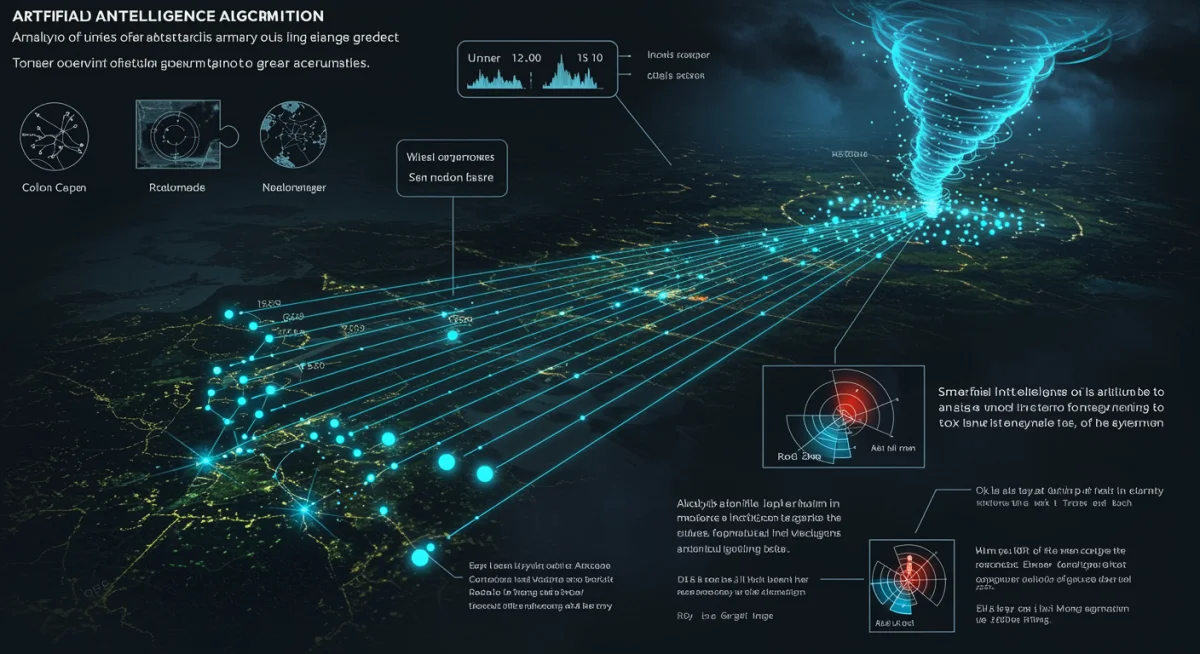
One of the most transformative developments in national tornado warning technology has been the integration of advanced Artificial Intelligence (AI) and Machine Learning (ML) algorithms. While AI has been a buzzword for years, its practical application in real-time severe weather prediction has reached new heights in the past quarter. Traditionally, meteorologists relied on complex numerical weather prediction (NWP) models, which, while powerful, often struggled with the small-scale, rapidly evolving nature of tornadic supercells. The sheer volume of data generated by modern radar systems, satellites, and ground sensors was also becoming a challenge for human analysis alone.
Recent breakthroughs have seen AI models trained on decades of historical weather data, including radar signatures, atmospheric soundings, and reports of actual tornado touchdowns. These models can now identify subtle patterns and precursors to tornado formation that might be missed by human observers or conventional NWP models. For instance, new deep learning algorithms are proving exceptionally adept at recognizing specific rotational velocity signatures within Doppler radar data that precede tornadogenesis by critical minutes. This early detection capability is invaluable, potentially extending warning lead times and giving communities more time to seek shelter.
Furthermore, AI is being used to refine the probabilistic forecasting of tornado activity. Instead of simply issuing a binary ‘yes’ or ‘no’ for tornado potential, these systems can now provide a more nuanced probability, allowing emergency managers to make more informed decisions about resource allocation and public messaging. The ability to distinguish between strong, long-track tornadoes and weaker, short-lived ones is also improving, leading to more targeted and effective warnings. This precision reduces ‘warning fatigue’ where too many false alarms cause the public to disregard future warnings.
The National Severe Storms Laboratory (NSSL) and various academic institutions have been at the forefront of these AI-driven innovations. Their collaborative efforts have led to the deployment of experimental AI tools within operational forecast centers, demonstrating tangible improvements in both forecast accuracy and lead time. The goal is to move towards a ‘nowcasting’ system that can predict tornado development within a 0-60 minute window with unprecedented reliability. This represents a significant leap forward in national tornado warning technology, making warnings smarter and more effective.
2. Next-Generation Phased Array Radar Systems
While AI processes the data, the quality of that data is paramount. This brings us to the second major development: the deployment and testing of next-generation phased array radar systems. The current WSR-88D (NEXRAD) network, while foundational, is over 30 years old. Its mechanically scanned antenna takes several minutes to complete a full scan of the atmosphere, which can be a lifetime during rapidly developing severe weather. Phased array radar, on the other hand, uses electronic steering to scan multiple directions almost instantaneously, providing much faster updates.
In the last three months, significant progress has been made in integrating experimental Phased Array Radar (PAR) prototypes into the national weather warning infrastructure. The Multi-Function Phased Array Radar (MPAR) program, a joint effort by NOAA, the FAA, and the Department of Defense, aims to replace multiple legacy radar systems (weather, air traffic control, and defense) with a single, more efficient, and powerful system. The immediate benefit for national tornado warning technology is the dramatic reduction in scan times. Instead of 4-6 minute updates, PAR can provide volumetric scans in under a minute, and even specific sector scans in mere seconds.
This rapid update capability allows meteorologists to observe the evolution of storm structures, particularly the mesocyclones that often precede tornado formation, in near real-time. This can reveal the rapid intensification or weakening of rotation, crucial information for issuing or canceling tornado warnings. The increased temporal resolution also helps in tracking the precise path of a tornado once it has formed, allowing for more accurate and localized warnings, reducing the size of warning polygons and minimizing disruption for those not directly in harm’s way.
Beyond speed, some PAR systems also offer improved spatial resolution and the potential for dual-polarization capabilities, which provide more detailed information about the type and shape of precipitation particles. This can help distinguish between hail, rain, and debris lofted by a tornado, offering another layer of evidence for confirming a tornado’s presence. While a full national rollout of PAR is still years away, the recent successful tests and integration efforts mark a critical step towards a more responsive and precise national tornado warning technology infrastructure. These advancements are not just about better data; they’re about transforming that data into actionable intelligence with unprecedented speed.
3. Hyper-Local Community Alert Networks and Micro-Targeting
Even the most accurate prediction and detection systems are ineffective if the warnings don’t reach the right people at the right time. The third key development focuses on enhancing the delivery and reception of tornado warnings through hyper-local community alert networks and micro-targeting capabilities. While national systems like the Emergency Alert System (EAS) and Wireless Emergency Alerts (WEA) are vital, recent efforts have focused on supplementing these with more granular, community-specific solutions.
Many communities across tornado alley and beyond have been investing in their own localized siren systems, but the real innovation lies in integrating these with digital platforms. New partnerships between local emergency management agencies and technology providers have led to the proliferation of opt-in alert systems that can send warnings directly to residents’ smartphones via apps, SMS, or email, often tied to specific geographic locations down to a street-level address. This micro-targeting means that only those living within the precise projected path of a tornado receive an alert, reducing unnecessary alarms for surrounding areas.
Furthermore, social media platforms are being leveraged more effectively than ever before. Local National Weather Service (NWS) offices and emergency management agencies are using platforms like Twitter, Facebook, and even Nextdoor to disseminate real-time updates, radar imagery, and safety instructions. Recent developments include automated systems that can translate NWS warnings into easily digestible social media posts, often including visual aids like maps, and push them out instantly. This ensures that warnings reach a broader, more diverse audience, including those who might not be tuned into traditional media or have WEA disabled.
Another aspect of this development is the improved integration of ‘ground truth’ reports from trained storm spotters and citizen scientists directly into the warning process. Mobile apps and reporting platforms now allow these individuals to submit real-time observations, photos, and videos of severe weather phenomena, which can be quickly verified and incorporated by forecasters. This bidirectional flow of information enhances situational awareness for both meteorologists and the public, creating a more robust and responsive national tornado warning technology ecosystem. The emphasis is on creating a layered approach to warnings, ensuring redundancy and maximizing reach, ultimately saving lives through timely and relevant information.
4. Advancements in Atmospheric Sensing and Data Fusion
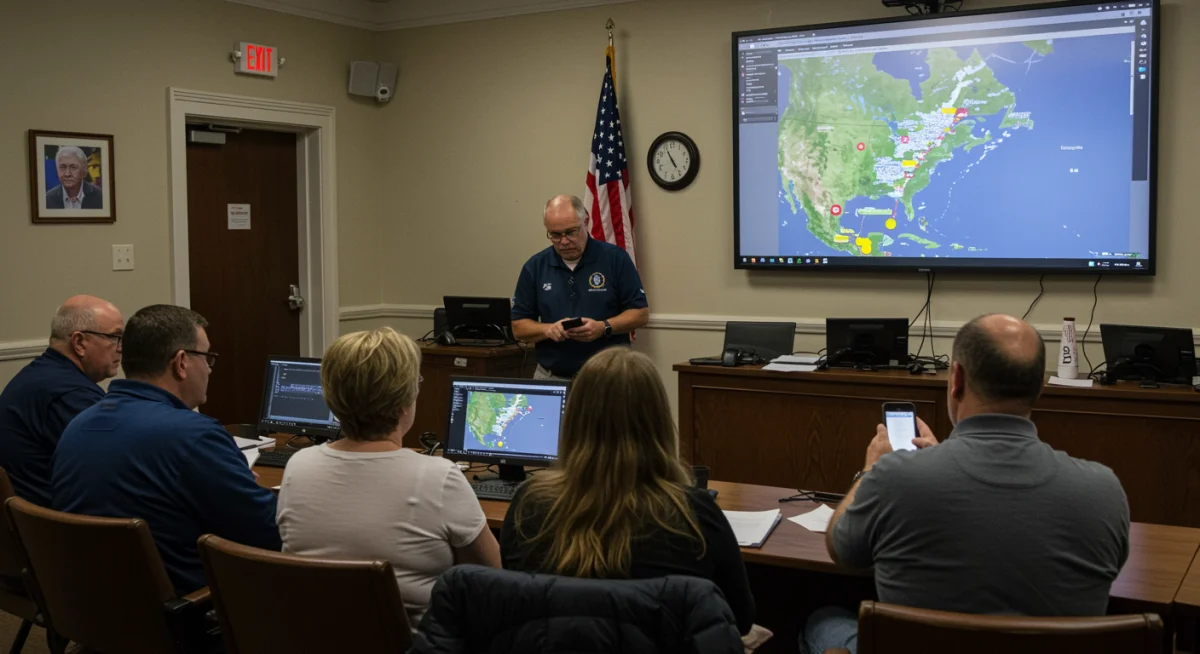
The fourth significant development lies in the realm of atmospheric sensing and the sophisticated fusion of diverse data sources. Improving national tornado warning technology isn’t just about better radar; it’s about painting a more complete picture of the atmosphere, both horizontally and vertically. The past three months have seen notable progress in deploying and utilizing new sensing technologies and methodologies for combining their outputs.
One key area is the expansion and improvement of ground-based sensor networks. Beyond traditional weather stations, there’s been an increase in the deployment of low-cost, high-density sensor arrays that measure temperature, humidity, and wind at very localized scales. These ‘mesonet’ networks can detect subtle boundaries and atmospheric instabilities that are critical for tornado formation but often too small to be resolved by large-scale models or even radar alone. New data assimilation techniques allow these fine-scale observations to be seamlessly integrated into numerical weather models, improving their initial conditions and subsequent forecasts.
Satellite technology has also seen advancements relevant to tornado prediction. Geostationary satellites, like NOAA’s GOES-R series, provide continuous, high-resolution imagery of cloud tops and atmospheric moisture. Recent algorithms have been developed to extract more information from these satellite observations, such as detecting rapidly cooling cloud tops (an indicator of strong updrafts) or evaluating the stability of the atmosphere at various levels. These satellite-derived products, when fused with radar and ground-based data, offer a more comprehensive view of storm environments, especially in areas with limited radar coverage.
Furthermore, efforts are underway to better utilize atmospheric profiling data from sources like radiosondes (weather balloons) and ground-based remote sensing instruments (e.g., microwave radiometers and lidar). These instruments provide vertical profiles of temperature, humidity, and wind, which are crucial for understanding the stability and shear within the atmosphere – key ingredients for severe thunderstorms. Recent improvements in data processing and visualization tools allow meteorologists to quickly interpret these complex profiles and identify environments favorable for tornado development.
The overarching theme here is data fusion: combining vast quantities of information from disparate sources (radar, satellite, ground sensors, AI models, human observations) into a cohesive, real-time picture of the atmosphere. This holistic approach significantly enhances the ability of forecasters to identify tornado threats earlier and with greater confidence, marking a crucial step forward for national tornado warning technology.
The Future of National Tornado Warning Technology
The developments in national tornado warning technology over the past three months paint a promising picture for the future of severe weather preparedness. The synergy between AI-driven analysis, rapid-scan radar, hyper-local alerts, and comprehensive atmospheric sensing is creating a more intelligent and responsive warning system than ever before. While challenges remain, particularly in areas like warning fatigue, communication gaps, and the inherent unpredictability of nature, the trajectory is clear: continuous improvement aimed at saving lives and protecting property.
As these technologies mature and become more widely implemented, we can expect even greater precision in tornado warnings, longer lead times, and more targeted messaging. The goal is not just to warn about a tornado, but to provide actionable intelligence that empowers individuals and communities to make the best decisions when every second counts. Staying informed about these advancements is a vital part of personal and community preparedness, reinforcing the importance of having a plan in place long before a storm approaches.
The commitment to advancing national tornado warning technology is a testament to the ongoing dedication of scientists, meteorologists, emergency managers, and technologists. Their collaborative efforts are building a more resilient nation in the face of one of nature’s most destructive forces.