US Museums: Redefining Visitor Engagement with Interactive Exhibits
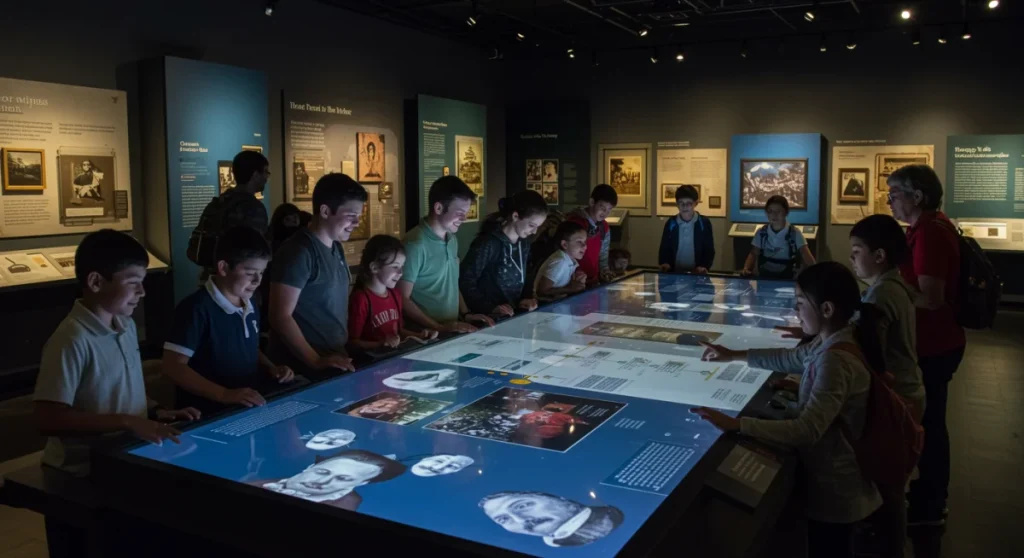
Leading US museums are transforming visitor experiences by integrating innovative interactive exhibits, creating dynamic and personalized journeys that deepen understanding and connection with art, science, and history, setting new benchmarks for cultural institutions in the modern era.
In a rapidly evolving cultural landscape, museums are constantly seeking innovative ways to connect with their audiences. This year, museum visitor engagement is being redefined by four pioneering US institutions that are leveraging interactive exhibits to create unforgettable experiences. These museums are not just showcasing artifacts; they are inviting visitors to become active participants in their own learning journeys, bridging the gap between passive observation and immersive discovery.
The Rise of Experiential Learning in Museums
The traditional museum model, often characterized by static displays and quiet reverence, is undergoing a significant transformation. Modern audiences, particularly younger generations, seek more dynamic and personal connections with content. This shift has propelled experiential learning to the forefront of museum strategy, recognizing that active participation enhances comprehension and retention.
Museums are responding by integrating technology, storytelling, and hands-on activities into their core offerings. This move is not merely about novelty; it’s a strategic effort to make complex subjects accessible and engaging for a wider demographic. The goal is to move beyond simply presenting information and instead facilitate genuine understanding through direct interaction.
Beyond the Glass Case: Why Interactivity Matters
Interactive exhibits break down barriers, allowing visitors to touch, manipulate, and even create. This direct engagement fosters a deeper cognitive and emotional connection to the subject matter. When visitors can actively participate, they are more likely to internalize the information and form lasting memories.
- Enhanced Cognitive Engagement: Hands-on activities stimulate different parts of the brain, leading to better understanding.
- Increased Retention: Experiences are more memorable than passive observations.
- Personalized Learning: Visitors can explore at their own pace and focus on areas of personal interest.
- Broader Appeal: Interactive elements attract diverse age groups and learning styles.
The emphasis on visitor interaction is reshaping how museums design their spaces and curate their collections. It encourages a more visitor-centric approach, where the museum experience is tailored to inspire curiosity and facilitate discovery, ultimately elevating the role of cultural institutions in contemporary society.
Smithsonian National Museum of Natural History: Unearthing Dinosaurs Digitally
The Smithsonian National Museum of Natural History in Washington D.C. has long been a beacon for scientific exploration and discovery. This year, their reimagined dinosaur hall stands as a prime example of how interactive exhibits can breathe new life into ancient history. The “Deep Time” exhibit, a multi-year renovation, goes far beyond traditional fossil displays, offering a journey through Earth’s history with cutting-edge technology.
Visitors are no longer just looking at dinosaur skeletons; they are immersed in their prehistoric worlds. Large-scale projections bring ancient ecosystems to life, showing dinosaurs moving, hunting, and interacting with their environments. Touchscreens provide detailed information about individual species, allowing users to explore anatomical features and ecological roles with unprecedented detail.
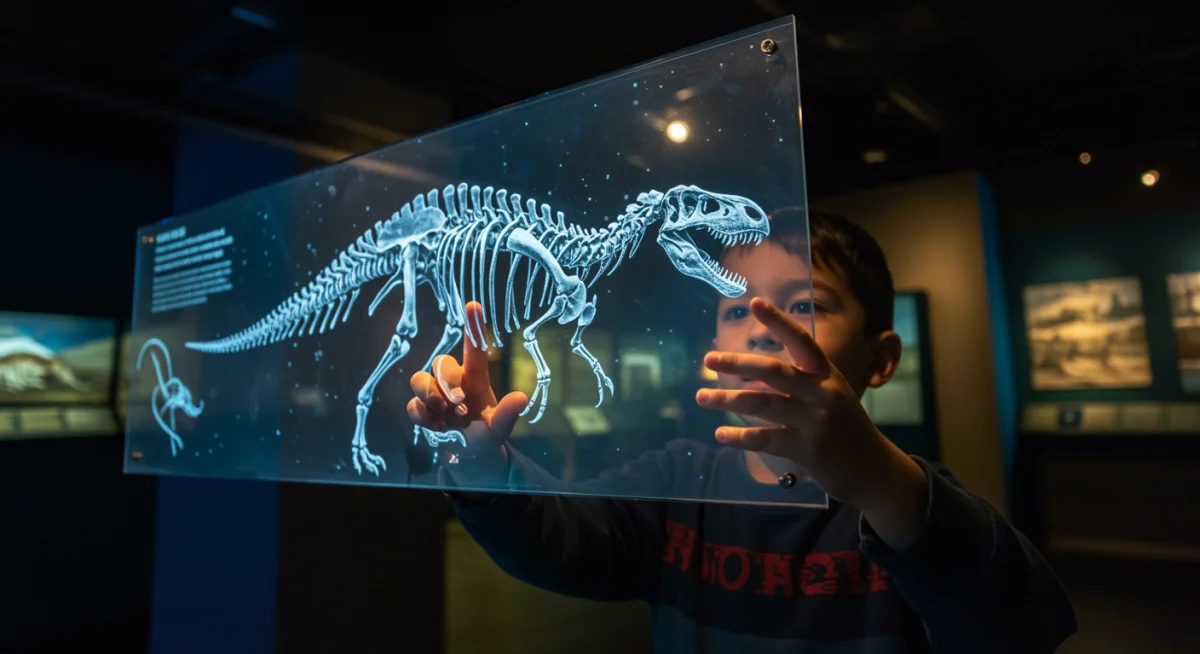
One of the most compelling features is the interactive paleontology lab, where visitors can virtually excavate fossils, piece together skeletons, and even analyze ancient DNA. This hands-on simulation provides a realistic glimpse into the work of paleontologists, making the scientific process tangible and exciting for all ages. It transforms passive viewing into active participation, fostering a deeper appreciation for scientific inquiry and the vastness of geological time.
Engaging the Next Generation of Scientists
The Smithsonian’s approach recognizes the importance of engaging young minds with scientific principles. By allowing children and adults alike to manipulate digital models and conduct virtual experiments, the museum cultivates a sense of wonder and encourages critical thinking. This is crucial for inspiring future generations to pursue careers in STEM fields.
- Virtual Excavation Stations: Users dig for digital fossils and learn about archaeological techniques.
- Animated Ecosystem Recreations: Immersive projections showcase prehistoric life in dynamic detail.
- Interactive “Meet the Scientist” Panels: Video interviews and digital profiles introduce visitors to real paleontologists.
The “Deep Time” exhibit successfully blends scientific accuracy with captivating presentation, demonstrating that even the most ancient subjects can be brought to life through thoughtful interactive design. It sets a high standard for how natural history museums can leverage technology to enhance museum visitor engagement.
The Exploratorium, San Francisco: Science Through Play
The Exploratorium in San Francisco has always been a trailblazer in interactive learning, famously operating under the philosophy that the best way to understand science is by doing it. This year, they continue to innovate with new exhibits that challenge perception and encourage playful experimentation. Their approach is less about showcasing artifacts and more about demonstrating scientific principles through direct, often whimsical, interaction.
One notable recent addition focuses on the science of perception and illusion. Visitors can step into rooms where gravity seems to defy logic, manipulate light to create stunning visual effects, and experiment with sound waves to understand acoustics. These exhibits are not just entertaining; they are carefully designed to illustrate complex scientific concepts in an intuitive and memorable way, making abstract ideas concrete.
The Exploratorium’s strength lies in its commitment to open-ended exploration. There are no right or wrong answers, only opportunities to observe, hypothesize, and discover. This self-directed learning environment empowers visitors to construct their own understanding of the world around them, fostering a lifelong love for scientific inquiry.
Designing for Discovery: Key Principles
The success of the Exploratorium’s interactive model stems from several core design principles that prioritize visitor agency and curiosity:
- Hands-On Imperative: Every exhibit encourages direct manipulation and experimentation.
- Open-Ended Exploration: No single “correct” way to interact, promoting individual discovery.
- Phenomenon-Based Learning: Focus on demonstrating scientific phenomena rather than just stating facts.
- Iterative Design: Exhibits are constantly refined based on visitor feedback and observation.
By consistently pushing the boundaries of interactive education, the Exploratorium continues to be an essential model for institutions looking to maximize museum visitor engagement through immersive, playful learning experiences. Their dedication to making science accessible and enjoyable for everyone remains unparalleled.
The Museum of Modern Art (MoMA), New York: Digital Art Encounters
The Museum of Modern Art (MoMA) in New York City, a global leader in contemporary art, is increasingly integrating interactive digital experiences to enhance appreciation and understanding of its vast collection. Recognizing that modern art can sometimes be challenging or intimidating, MoMA’s new initiatives aim to bridge the gap between complex artistic concepts and the everyday visitor.
This year, MoMA has introduced several digital installations that allow visitors to interact with iconic artworks in new dimensions. For instance, augmented reality (AR) experiences enable visitors to see how a painting might have looked in the artist’s studio or explore the layers of a sculpture using their own devices. These AR overlays provide context, historical information, and even artist interviews, transforming a static viewing into a dynamic, personalized narrative.
Furthermore, interactive kiosks within certain galleries allow visitors to curate their own virtual exhibitions, selecting pieces from MoMA’s collection and arranging them based on themes, colors, or historical periods. This not only provides a creative outlet but also encourages a deeper analytical engagement with the art, fostering a sense of personal ownership and discovery.
Making Modern Art Accessible and Personal
MoMA’s digital interactive strategy is focused on demystifying modern art and making it more approachable. By offering multiple pathways to engage with the collection, they cater to diverse interests and knowledge levels, ensuring that every visitor can find a meaningful connection.
- Augmented Reality Tours: Overlaying digital content onto physical artworks for added context.
- Interactive Digital Walls: Large-scale touchscreens allowing exploration of artist biographies and art movements.
- Personalized Curatorial Tools: Visitors create their own virtual art walks and collections.
These digital initiatives at MoMA are not replacing the physical experience of art but rather augmenting it, providing layers of information and interaction that deepen understanding and appreciation, thereby significantly boosting museum visitor engagement in the realm of modern art.
The California Academy of Sciences, San Francisco: Ecosystem Immersion
The California Academy of Sciences in San Francisco, an institution that combines a natural history museum, aquarium, and planetarium, excels at creating immersive, interactive experiences that highlight biodiversity and environmental science. This year, their focus on ecosystem immersion takes center stage, particularly in their rainforest and aquatic exhibits.
Within the four-story living rainforest, interactive touchpoints provide real-time data on temperature, humidity, and species identification. Visitors can use digital scopes to zoom in on tiny insects or plant details, accompanied by audio narratives about their ecological roles. This integration of living exhibits with digital information creates a holistic understanding of complex ecosystems.
In the aquarium sections, new interactive stations allow visitors to design their own sustainable fish farms or simulate the impact of climate change on marine life. These simulations are not just games; they are powerful educational tools that encourage critical thinking about environmental stewardship and the interconnectedness of all life. The academy’s commitment to interactive learning makes scientific concepts tangible and relevant to daily life.
Bridging Science and Conservation Through Interaction
The Academy’s interactive exhibits serve a dual purpose: educating the public about scientific principles and inspiring action towards environmental conservation. By allowing visitors to directly engage with ecological challenges, the museum empowers them to become advocates for the planet.
- Real-Time Environmental Data Displays: Live feeds from ecosystems within the museum.
- Interactive Climate Change Simulators: Model the effects of human activity on the environment.
- Biodiversity Hotspot Explorers: Digital maps and databases detailing global biodiversity.
The California Academy of Sciences exemplifies how institutions can leverage interactive exhibits to not only educate but also inspire a sense of responsibility towards our planet, fostering a profound level of museum visitor engagement around critical environmental issues.
The Future of Interactive Exhibits and Visitor Experience
The examples set by these four US museums underscore a broader trend in the cultural sector: the future of museums is undeniably interactive. As technology continues to advance, the possibilities for creating immersive and personalized visitor experiences will only expand. We can anticipate even more sophisticated uses of virtual reality (VR), artificial intelligence (AI), and haptic feedback to create truly multi-sensory engagements.
The integration of AI could lead to highly personalized museum tours, where exhibits adapt to a visitor’s interests and learning pace in real-time. VR could transport visitors to ancient civilizations or the depths of the ocean, offering experiences that are physically impossible in a traditional setting. These innovations promise to make museums more dynamic, relevant, and accessible than ever before.
However, the essence of interactive exhibits will remain the same: to foster curiosity, encourage discovery, and create meaningful connections between visitors and the content. Technology is merely a tool to achieve these fundamental goals, enhancing the human experience without overshadowing the core mission of education and inspiration.
Key Innovations Shaping Tomorrow’s Museum
Several technological advancements are poised to revolutionize how museums engage with their audiences:
- Virtual Reality (VR) and Augmented Reality (AR): Offering immersive storytelling and enhanced contextual information.
- Artificial Intelligence (AI): Personalizing visitor journeys and providing adaptive learning experiences.
- Haptic Feedback and Multi-Sensory Displays: Adding touch, smell, and sound to visual interactions.
- Gamification: Integrating game-like elements to make learning more engaging and rewarding.
The ongoing evolution of interactive exhibits demonstrates a commitment from museums to remain vibrant and essential institutions in a rapidly changing world. By embracing innovation, they ensure that the learning journey is not just informative but also deeply engaging and personally transformative, continuing to redefine museum visitor engagement.
| Museum | Interactive Highlight |
|---|---|
| Smithsonian National Museum of Natural History | Deep Time exhibit with virtual paleontology labs and animated ecosystems. |
| The Exploratorium, San Francisco | Hands-on exhibits exploring perception, light, and sound through playful experimentation. |
| Museum of Modern Art (MoMA), New York | Augmented reality experiences and interactive digital curatorial tools. |
| The California Academy of Sciences | Ecosystem immersion with real-time data and environmental impact simulators. |
Frequently Asked Questions About Museum Interactivity
Interactive visitor engagement involves designing museum exhibits that allow visitors to actively participate, manipulate, and explore content rather than just passively observing. This can include hands-on activities, digital touchscreens, augmented reality, and virtual simulations, fostering deeper comprehension and personal connection with the subject matter.
Museums are adopting interactive exhibits to cater to modern audiences who seek more dynamic and personalized learning experiences. Interactivity enhances cognitive engagement, increases retention of information, makes complex subjects more accessible, and broadens appeal to diverse age groups and learning styles, aligning with contemporary educational philosophies.
Technology, such as augmented reality, virtual reality, and AI, enhances museum engagement by offering immersive storytelling, personalized learning paths, and dynamic contextual information. It allows visitors to virtually explore historical settings, interact with digital artifacts, and participate in simulations that deepen their understanding and make visits more memorable.
Successful examples include the Smithsonian’s “Deep Time” dinosaur hall with virtual paleontology, the Exploratorium’s hands-on science experiments, MoMA’s augmented reality art tours, and the California Academy of Sciences’ ecosystem immersion with real-time environmental data and climate simulators. These exhibits transform passive viewing into active, engaging learning.
The future for interactive exhibits in US museums is bright, with continued advancements in VR, AR, AI, and multi-sensory displays. These technologies will enable even more personalized, immersive, and educational experiences, making museums more accessible, relevant, and impactful for future generations while maintaining their core mission of cultural enrichment.
Conclusion
The commitment of these four US museums to redefining museum visitor engagement through innovative interactive exhibits marks a pivotal moment for cultural institutions. By embracing experiential learning, cutting-edge technology, and visitor-centric design, they are transforming how audiences connect with art, science, and history. These pioneering efforts ensure that museums remain dynamic, relevant, and indispensable centers of discovery and inspiration in the 21st century. Their success provides a compelling blueprint for how cultural education can evolve, offering immersive and unforgettable experiences that resonate deeply with every visitor.