Wildfire smoke alerts worsening urban air quality indicate hazardous rises in fine particulate matter (PM2.5); immediately check local AQI, limit outdoor activity, use HEPA filtration or N95 masks, protect vulnerable people, and follow public health guidance to reduce exposure.
wildfire smoke alerts worsening urban air quality are appearing more often — and you might feel the effects in your daily routine. Want quick, practical ways to check your exposure, protect your home and keep family members safe? This short guide explains what alerts mean and the steps you can take today.
what wildfire smoke alerts mean for city residents
wildfire smoke alerts worsening urban air quality signal rising fine particles and haze over cities. They warn that outdoor air may be unhealthy for many people.
City residents should know what the alerts mean and what simple actions reduce risk right away.
How alerts are issued and what to expect
Alerts come from air agencies using monitors and satellite data. They describe current air quality and likely trends for hours or days.
When an alert is active, expect hazy skies, reduced visibility, and higher PM2.5 levels that can linger.
- Advisory: take basic precautions if you are sensitive.
- Warning: reduce outdoor exertion and protect children and older adults.
- Emergency: stay indoors and follow local health guidance.
Not every alert is the same; intensity varies by wind, fire size, and local weather. Check updates often to stay safe.
Practical steps to protect yourself at home
Close windows and doors to limit smoke entry. Use HVAC recirculation or a portable air cleaner with a HEPA filter. Seal gaps with towels or tape if needed.
- Run certified air purifiers in main rooms on high.
- Use fans to circulate indoor air only if fresh air is not being drawn from outside.
- Replace or upgrade HVAC filters to MERV 13 or better when possible.
If you must go outside, wear an N95 or equivalent mask for short trips. Avoid exercise or heavy work outdoors until air improves.
People with asthma, heart disease, or weakened immune systems are more at risk. Keep rescue inhalers ready and follow your care plan.
How to monitor air quality in your neighborhood
Use reliable sources like local air quality maps, government apps, or community monitors. Look for the AQI and PM2.5 readings rather than only visual smoke.
- Check real-time AQI hourly during smoke events.
- Set alerts on apps for threshold exceedances.
- Follow local health department channels for guidance.
Local schools, workplaces, and building managers may change plans based on alerts. If you organize neighbors, share verified sources and simple steps to protect common spaces.
Responding quickly to alerts can reduce exposure and keep more people healthy during smoke episodes.
Summary: When you see wildfire smoke alerts worsening urban air quality, act by checking AQI, limiting outdoor activity, improving indoor air, and protecting those most vulnerable.
health impacts and who’s most at risk

wildfire smoke alerts worsening urban air quality mean more fine particles in the air. These particles can cause cough, eye irritation, and make breathing harder for many people.
Knowing common symptoms and who is most at risk helps you protect yourself and others quickly.
Immediate symptoms to watch for
Symptoms can appear fast after exposure. Pay attention to changes in breathing or energy.
- Coughing, sore or scratchy throat.
- Watery or irritated eyes.
- Shortness of breath or chest tightness.
- Worse wheezing for people with asthma.
These signs often improve after moving to cleaner air. If symptoms get worse, seek medical help.
How smoke affects the body
PM2.5 particles are very small and travel deep into lungs. They can trigger asthma attacks and inflame airways. For some, smoke also raises the chance of heart strain.
Short bursts of smoke can worsen breathing and cause fatigue. Repeated or long exposure may increase risks for heart and lung problems over time.
Who is most vulnerable
Certain groups face higher danger and should take extra care during alerts.
- Children — lungs are still developing and they breathe faster.
- Older adults — may have weaker lungs or heart conditions.
- People with asthma, COPD, or heart disease — symptoms can spike quickly.
- Pregnant people and those with diabetes or weakened immune systems.
Outdoor workers and athletes who breathe hard outdoors can also get higher doses of smoke. Plan shifts or training for cleaner days when possible.
If you use inhalers or heart medicines, keep them handy and follow your action plan. Check with your doctor if your treatment needs adjustment during smoke events.
When to get medical attention
Most mild symptoms improve indoors with cleaner air. Seek care if breathing trouble is marked or sudden.
- Difficulty walking up stairs or speaking due to breathlessness.
- Chest pain, fainting, or severe dizziness.
- Blue lips or face, or very rapid heartbeat.
Call emergency services or go to urgent care if you see these worrying signs.
Simple steps reduce risk: use a HEPA air purifier indoors, wear an N95 for needed outdoor trips, limit exercise outside, and watch the AQI and PM2.5 levels. These measures help protect the most vulnerable and keep symptoms from getting worse.
In short: smoke can affect lungs and heart, but quick actions—staying in clean air, using masks, and following medical plans—cut risk for those most at risk.
practical steps to protect indoor air and breathing
wildfire smoke alerts worsening urban air quality mean you may need to act at home to keep air safe. Simple steps can cut smoke indoors and protect breathing.
These tips focus on sealing, filtering, and smart behavior so you and your family breathe easier during smoke events.
seal gaps and create a clean room
Start by keeping smoke out. Pick one room as your main cleaner air space and close off the rest of the house.
- Close windows and exterior doors; seal gaps with weather stripping or towels.
- Choose an interior room with few windows as the clean room.
- Keep interior doors closed and move family activities there.
Reducing airflow from the outside makes filtration more effective in one place.
use air cleaners and upgrade filters
Air cleaners remove fine particles. A portable HEPA unit in the clean room helps most.
- Choose a HEPA purifier sized for the room and run it on high while smoke is present.
- If you have central HVAC, set it to recirculate and use MERV 13 filters if compatible.
- Place purifiers off the floor and avoid blocking air intake or outlet.
Run purifiers continuously during alerts. Changing filters on schedule keeps them effective.
Do not open windows to cool the room when smoke is heavy. Use fans only to move indoor air, not to bring in outside air.
masks, short trips, and vehicle tips
When you must go outside, an N95 or equivalent properly fitted mask reduces inhaled particles. Cloth masks are not enough for smoke.
- Wear an N95 for short errands and avoid prolonged outdoor exercise.
- Fit the mask snugly to your face; avoid masks with exhalation valves for source control.
- When driving, set car vents to recirculate and close windows during smoky periods.
If outdoor work is unavoidable, schedule heavy tasks for cleaner air days when possible.
Keep rescue inhalers and medications accessible. Monitor symptoms and move to cleaner air at the first sign of trouble.
For children, older adults, and those with lung or heart conditions, take extra care: keep them in the clean room and limit any exposure.
Summary: close and seal your home, run HEPA cleaners or upgraded HVAC filters, use well-fitted N95 masks for needed trips, and keep medicines ready. These actions cut indoor smoke and help protect breathing during wildfire smoke alerts worsening urban air quality.
monitoring, community action and policy responses
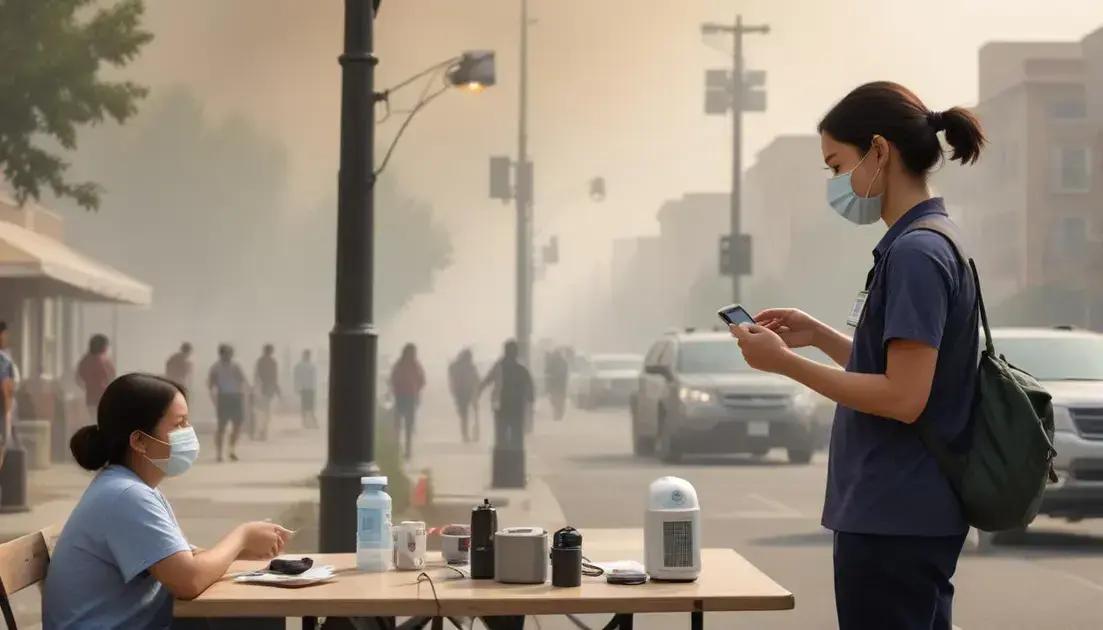
wildfire smoke alerts worsening urban air quality make monitoring and local action vital. Simple tools and clear community steps help people stay safe when smoke arrives.
Know how to track air, organize neighbors, and push for policies that reduce harm now and in the future.
ways to monitor air quality
Use trusted sources for real-time data. Apps and government maps give quick AQI and PM2.5 readings for your area.
- Check official air quality maps and local health department updates hourly during smoke events.
- Use low-cost community sensors for neighborhood-level data, but compare them to reference monitors.
- Set alerts on apps for thresholds like unhealthy AQI so you get notified fast.
Learn what numbers mean: AQI and PM2.5 show particle levels and health risk. Relying on data instead of just looking at the sky improves decisions.
community actions that make a difference
Neighbors can share resources and information to protect more people. Small local efforts add up.
- Organize a clean air room in a community center with HEPA purifiers for those without safe spaces at home.
- Set up a neighborhood alert group to share verified AQI updates and tips.
- Coordinate volunteers to help seniors and people with health needs get supplies like filters or masks.
Schools and employers can adjust schedules based on alerts and create indoor plans for smoky days. Local networks that act quickly reduce exposure for many.
Funding drives, crowd-sourced sensor maps, and shared tool libraries are practical steps communities can use now.
policy responses to protect cities
Local and regional policies shape long-term protection. Strong plans make responses faster and fairer.
- Adopt clear action thresholds for schools and outdoor workers based on AQI and PM2.5.
- Fund public clean air spaces and programs to distribute purifiers to vulnerable households.
- Invest in air monitoring networks and public alerts that reach non-English speakers and underserved areas.
Urban planning can also reduce risk: green buffers, better building ventilation standards, and support for cleaner fuels cut smoke exposure over time.
Combining good monitoring, grassroots coordination, and smart policy yields faster help and less harm. Communities that track air, share resources, and press for practical rules give residents a better chance to stay healthy during events tied to wildfire smoke alerts worsening urban air quality.
When wildfire smoke alerts worsening urban air quality appear, take quick, simple steps to cut exposure. Check local AQI, keep a sealed clean room with a HEPA purifier, and wear a well-fitted N95 for short outdoor trips. Help vulnerable neighbors and push for shared community actions—small moves make a big difference for health.
FAQ – wildfire smoke alerts worsening urban air quality
What does a wildfire smoke alert mean for city residents?
It signals high fine particles (PM2.5) and reduced air quality. Limit outdoor time, check the local AQI, and follow public health advice.
How can I protect indoor air during an alert?
Keep windows and doors closed, seal gaps, run a properly sized HEPA air purifier, and set HVAC to recirculate with higher-grade filters when possible.
Who is most at risk from smoke exposure?
Children, older adults, people with asthma, COPD or heart disease, pregnant people, and outdoor workers are more vulnerable and should take extra precautions.
When should I seek medical attention for smoke-related symptoms?
Seek care if you have severe shortness of breath, chest pain, fainting, blue lips, or symptoms that worsen despite moving to cleaner air.